The 5 Health Metrics Every Remote Tech Worker Should Track
You monitor uptime, error rates, and deployment pipelines. But are you tracking your own health? Here are 5 simple metrics — sleep, Vitamin D, steps, hydration, and resting heart rate — that can quietly transform how you feel and perform working from home.
You Track Everything at Work. Are You Tracking Yourself?
You know your system's uptime.
You know your p95 latency.
You probably have dashboards, alerts, and runbooks for the infrastructure you maintain.
But when's the last time you checked in on the infrastructure running you?
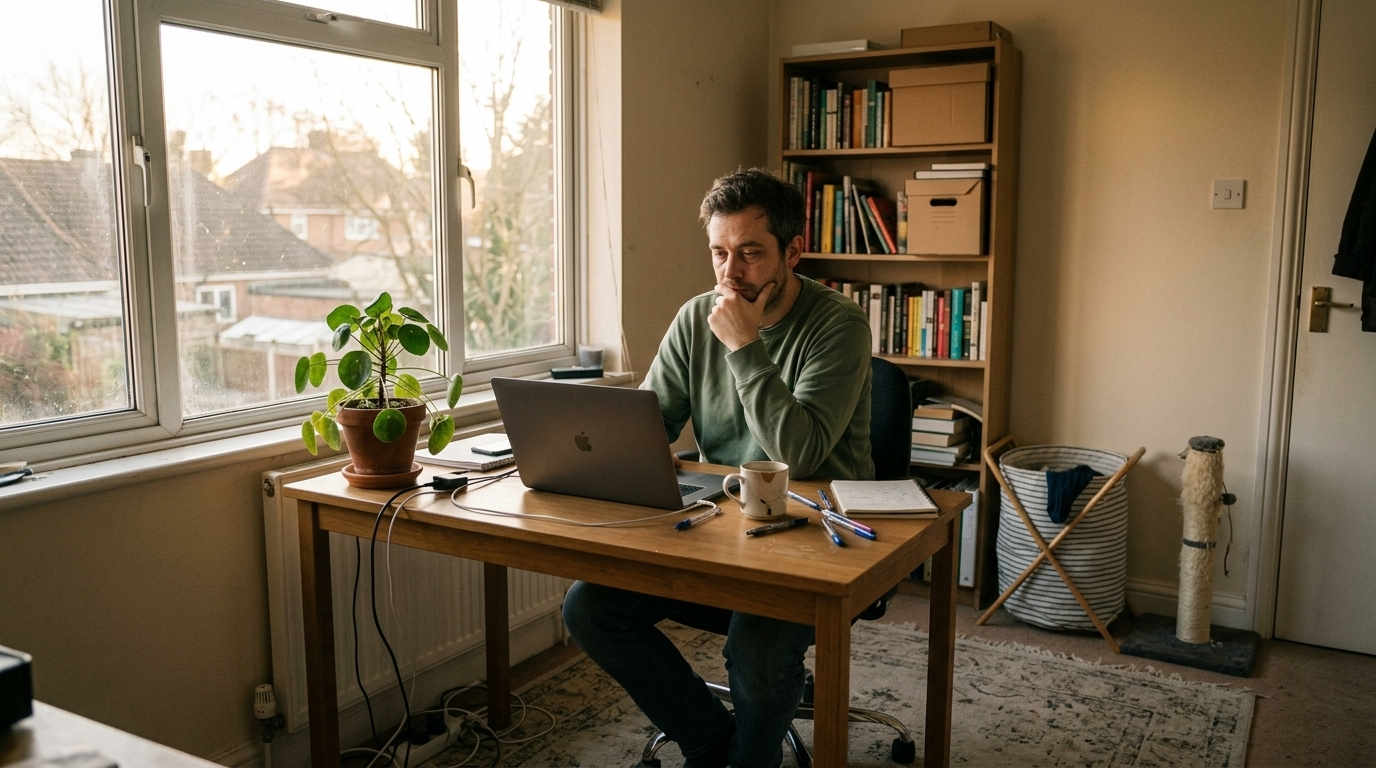
Remote tech work is uniquely brutal on the body — not in dramatic ways, but in quiet, compounding ones. Sedentary hours. No natural light. Forgetting to drink water. Sleeping badly and blaming it on stress.
The good news: you don't need to become a biohacker.
You just need to track five numbers.
Why Health Tracking Works for Tech Minds
Engineers and developers are systems thinkers.
We don't fix what we can't observe. We don't optimize what we can't measure.
Health is the same.
When you start tracking even a handful of simple metrics, two things happen:
- Patterns emerge that you couldn't feel in the moment.
- You have data to act on — not vibes.
Whether you use an Apple Watch, an Oura Ring, a Google Sheet, or just a notes app, the habit of noticing changes everything.
The 5 Metrics That Actually Matter
1. Sleep Duration
Sleep is the foundational variable.
Every other metric — focus, heart rate, mood, hydration, Vitamin D absorption — is downstream of sleep quality and duration. When you're running on 5 hours, everything else degrades.
What to track: Total sleep time per night. Start there before worrying about sleep stages or REM cycles.
Target: 7–9 hours for most adults. If you're consistently under 6.5, that's a signal worth taking seriously.
How to track it:
- Apple Watch with Sleep Focus enabled
- Oura Ring (exceptional passive tracking — just wear it)
- A simple note in your phone each morning
The goal isn't perfection. It's awareness. Most remote workers are surprised when they first log sleep — they discover they're sleeping significantly less than they think.
2. Vitamin D
This one is invisible — which makes it dangerous.
Remote tech workers are some of the most Vitamin D–deficient people on earth. We sit indoors, often in north-facing rooms, for 8–12 hours a day. In winter, many of us never see meaningful sunlight.
Vitamin D deficiency symptoms include:
- Fatigue that no amount of sleep fixes
- Brain fog
- Low mood or mild depression
- Weakened immune function
What to track: Get a simple blood panel once or twice a year. Your doctor can order it, or you can use an at-home test kit. The target range is generally 40–60 ng/mL.
How to improve it:
- 10–20 minutes of midday sun (even a walk helps)
- Vitamin D3 + K2 supplement (commonly 2,000–5,000 IU/day; consult your doctor)
- Foods like salmon, fortified milk, or eggs
You don't need a wearable for this one. Just a lab test and a calendar reminder to retest in 6 months.
3. Daily Steps
Sitting is the silent tax of remote work.
In an office, you walk to the parking lot, to the kitchen, to a colleague's desk. Working from home, you can go an entire day moving less than 1,000 steps — especially on heavy-meeting days.
Chronic low movement doesn't just affect fitness. It affects:
- Circulation
- Energy levels
- Cognitive function
- Sleep quality
Target: A realistic 7,000–8,000 steps per day has strong evidence behind it. You don't need 10,000.
How to track it:
- Apple Watch, Oura, Garmin, or any fitness tracker
- Your iPhone's built-in Health app (it counts steps passively)
- Even a cheap pedometer clip
One practical hack: set a step threshold alert. On Apple Watch, you can configure activity rings to notify you when you've been still too long. On Oura, low activity days are highlighted in your weekly summary.
4. Hydration
Mild dehydration — even 1–2% — measurably impairs cognitive performance.
For remote workers staring at code all day, that's a real problem. And because you're not moving much, you don't get natural thirst cues the way you would during physical activity.
What to track: Total water intake in ounces or milliliters per day.
Target: ~80–100 oz (2.3–3 liters) for most adults, adjusted for body weight and activity.
How to track it:
- Apple Watch can log hydration via Siri or the Health app ("Hey Siri, log 16 oz of water")
- Manual logging in apps like WaterMinder or Apple Health
- The low-tech method: a 32oz bottle you refill twice before 5 PM
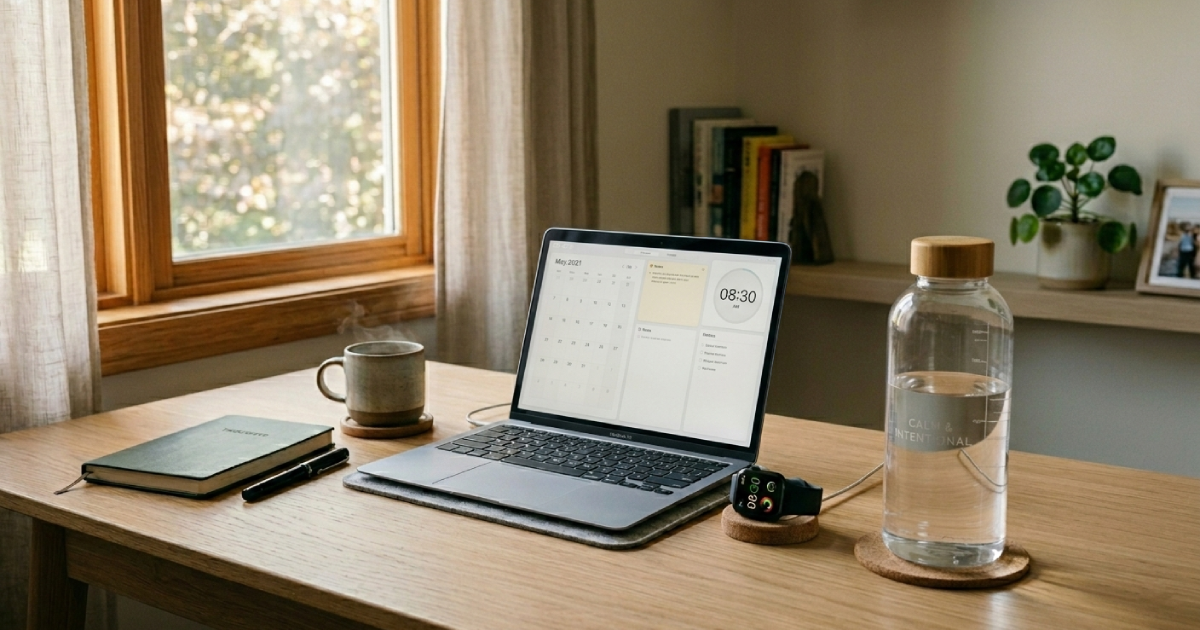
Hydration doesn't need a wearable. It needs a system — usually a visual cue, like a large bottle on your desk, that doesn't let you forget.
5. Resting Heart Rate
Resting heart rate (RHR) is one of the best single-number indicators of cardiovascular fitness and recovery status.
As you get healthier, it goes down. When you're stressed, sick, overtrained, or under-recovered, it goes up.
For remote workers who don't otherwise get feedback on their physiological state, RHR is a quiet, daily signal.
What to track: Your RHR first thing in the morning, before getting out of bed.
Target: Lower is generally better. Average for adults is 60–80 bpm. Athletes often sit 45–60 bpm. The trend matters more than the absolute number — watch for upward creep over days or weeks.
How to track it:
- Apple Watch and Oura both measure RHR automatically overnight
- Most fitness trackers have this built in
- Manual 60-second count at your wrist if you have no device
If you notice your RHR suddenly elevated 5–8 bpm above your baseline, it's often a sign your body is fighting something — or that you need rest more than another late-night session.
How to Actually Use This Data
Tracking is step one. Making it useful is step two.
Here are three practical approaches depending on your setup:
Option A: Wearable + Weekly Review
If you have an Apple Watch or Oura Ring, both apps provide weekly summaries. Set a 10-minute Sunday appointment to review your averages — sleep duration, steps, RHR. Look for trend changes, not perfection.
Option B: Simple Spreadsheet
If you prefer control over a vendor's dashboard, a Google Sheet works beautifully. Five columns, one row per day. Log in the morning, takes 60 seconds. After a month, you'll see patterns you'd never catch day-to-day.
Date | Sleep (hrs) | Steps | Water (oz) | RHR (bpm) | Vit D supplement? (Y/N)
Option C: AI-Assisted Summaries
If you use Apple Health, Oura's API, or export your data, you can feed it into an AI assistant and ask it to surface patterns. "What does my sleep data look like on days after I hit 8,000 steps?" is the kind of question that becomes answerable.
This is the connection between health and systems thinking that most people miss: once your data is structured, it becomes queryable.
Recommended Tool: Apple Watch Series 11
![Apple Watch Series 11 [GPS 46mm] Smartwatch with Jet Black Aluminum Case](https://m.media-amazon.com/images/I/6129OfG4gfL._AC_SX679_.jpg)
Apple Watch Series 11 [GPS 46mm] Smartwatch with Jet Black Aluminum Case
The Apple Watch Series 11 is the single device that covers four of the five metrics in this post — sleep duration, daily steps, resting heart rate, and hydration reminders — all feeding directly into Apple Health. Wear it to bed, wear it to your desk, and let it quietly build the dataset that tells you how you're actually doing. For remote tech workers who want one tool that just works, this is it.
As an Amazon Associate, we earn from qualifying purchases. This helps support our blog at no extra cost to you.
 Trusted marketplace
You Don't Need to Track Everything at Once
Pick one metric. Start there.
Most people find sleep is the most eye-opening — they discover they're sleeping far less than they assumed, and the connection to afternoon brain fog or irritability suddenly clicks.
Once you've built the habit of checking one number, adding a second is easy.
The goal isn't to optimize yourself into a machine.
It's to apply the same observability mindset you use at work to the system that makes your work possible.
Remote work already took away the built-in physical cues of office life — commutes, walking to meetings, water cooler conversations that force you to stand up.
Tracking these five metrics gives you back a signal.
You've built monitoring for everything else that matters.
Your health deserves the same.